Blog #6: The Compass, the Map, and the Fog: Why Organizations Drift
From Story to Platform
Corporatia is fictional. The conditions are not.
Organizations today operate in environments defined by increasing complexity, competing priorities, constant change, and pressure to deliver more with less. Leaders often experience the symptoms clearly: initiatives stall, decision cycles slow, accountability blurs, and progress becomes difficult to sustain. Yet the underlying cause frequently remains hidden.
The Compass, the Map, and the Fog uses story to make those conditions visible. The kingdom of Corporatia provides a language for seeing what many leaders experience but struggle to describe.
Beyond the fable lies a practical application. The conditions revealed through the story form the foundation of the Commitment Model and the Living Operating System, an approach developed through decades of organizational transformation work across industries. Together, they help leaders move beyond symptoms and address the commitments, structures, and operating conditions that determine whether organizations advance coherently or drift into the Fog.
The story is the beginning. The work is what comes next.
Blog #5: Holding What the System Has Learned — The Rhythm

Mirror | Rhythm
Why Alignment Doesn’t Last and How Leaders Sustain It
Transformation is not a moment. It is a system in motion.
Even aligned systems drift. Not because leaders fail, but because conditions change, priorities evolve, internal/external pressures increase, and new demands enter the system. What once felt clear begins to compete with urgency, and over time, organizations slowly return to familiar patterns.
This is where most transformation efforts begin to fade, not during the launch, but after it. Sustained transformation requires two things:
Reflection (Mirror)
Cadence (Rhythm)
Without reflection, organizations lose awareness. Without rhythm, they lose consistency. Together, they create the conditions that allow alignment to endure beyond the initial momentum of change.
The Mirror: Seeing What’s Real
The Mirror reflects the system to itself. Often, not as leadership intended, but as the system has learned to operate. It reveals what is truly happening, where meaning is beginning to break, and where culture is quietly shifting beneath the surface. Over time, organizations develop gaps between what they say they value and what the system actually reinforces.
The Mirror makes those gaps visible. It exposes decisions that no longer align with priorities, behaviors that quietly contradict culture, and patterns that teams have normalized but no longer question.
Without reflection, drift becomes difficult to recognize because the system slowly adapts to dysfunction and begins treating it as normal.
“Performance tells you what happened. Reflection tells you why.”
The Rhythm: Holding It Together
If the Mirror creates awareness, Rhythm creates continuity. Rhythm is what allows alignment to survive pressure, scale, and time. It creates consistent execution, reinforced priorities, and organizational memory. Transformation does not hold through announcements; it holds through repetition. It holds through decisions leaders reinforce consistently, behaviors teams see modeled repeatedly, and operating cadence that keeps priorities visible even as conditions shift. Rhythm prevents old habits from quietly becoming the system again.
Why Systems Drift
Without rhythm, priorities shift silently, decisions lose force, and teams revert to old patterns. Execution becomes reactive, and alignment weakens. The system begins optimizing for urgency instead of intention.
Organizations do not usually collapse all at once; they drift gradually. Meetings continue, dashboards remain active, and work still moves forward. But the system no longer moves together. Eventually, the gap between what leadership intends and what the organization experiences becomes impossible to ignore.
The Leadership System (Bringing It Together)
Sustainable transformation is not driven by a single initiative, framework, or moment of alignment. It is a living system that must continuously adapt as conditions change.
Fog — Misalignment emerges
Compass — Direction is chosen
Map — Work is structured
Lantern — Signals are revealed
Mirror & Rhythm — Alignment is sustained
Together, these conditions form a leadership system designed not just to create change but to sustain it. Transformation is not achieved the moment clarity appears. It is sustained through the systems leaders build to continuously realign, reflect, and respond over time.
Closing Reflection
Scale changes the complexity. It does not eliminate the conditions. Whether in a global enterprise, a growing business, or a small leadership team, the patterns are remarkably similar; clarity drifts, structures strain, signals get missed, and commitment fragments under pressure.
Most organizations do not fail because leaders lack intelligence, strategy, or effort. They fail because misalignment compounds quietly, structures drift, and priorities lose coherence faster than teams can sustain them. That is when the Fog returns, the Compass shifts, the Map ages. And without Reflection and Rhythm, organizations slowly fall back into the very patterns they once intended to change.
This is not a framework; this is a Living Operating System. It is a way of seeing, a way of leading, and a way of sustaining alignment under pressure. Because alignment is never permanent, it must be renewed through the rhythm of leadership itself.
The Compass, the Map, and the Fog was written for leaders navigating complexity without clear visibility, where speed alone no longer creates progress. Sustainable transformation is not built through force. It is built through awareness, commitment, structure, signal, reflection, and renewal, practiced continuously.
And this is only the beginning.
Continue the Journey … Submit an Inquiry with your interest.
Explore the upcoming book: The Compass, the Map, and the Fog
Download the Leadership Guide preview
Bring the workshop experience to your leadership team
Follow the ongoing Insights series on navigating complexity, alignment, and sustainable transformation
Blog #4: Seeing What the System Cannot — The Lantern
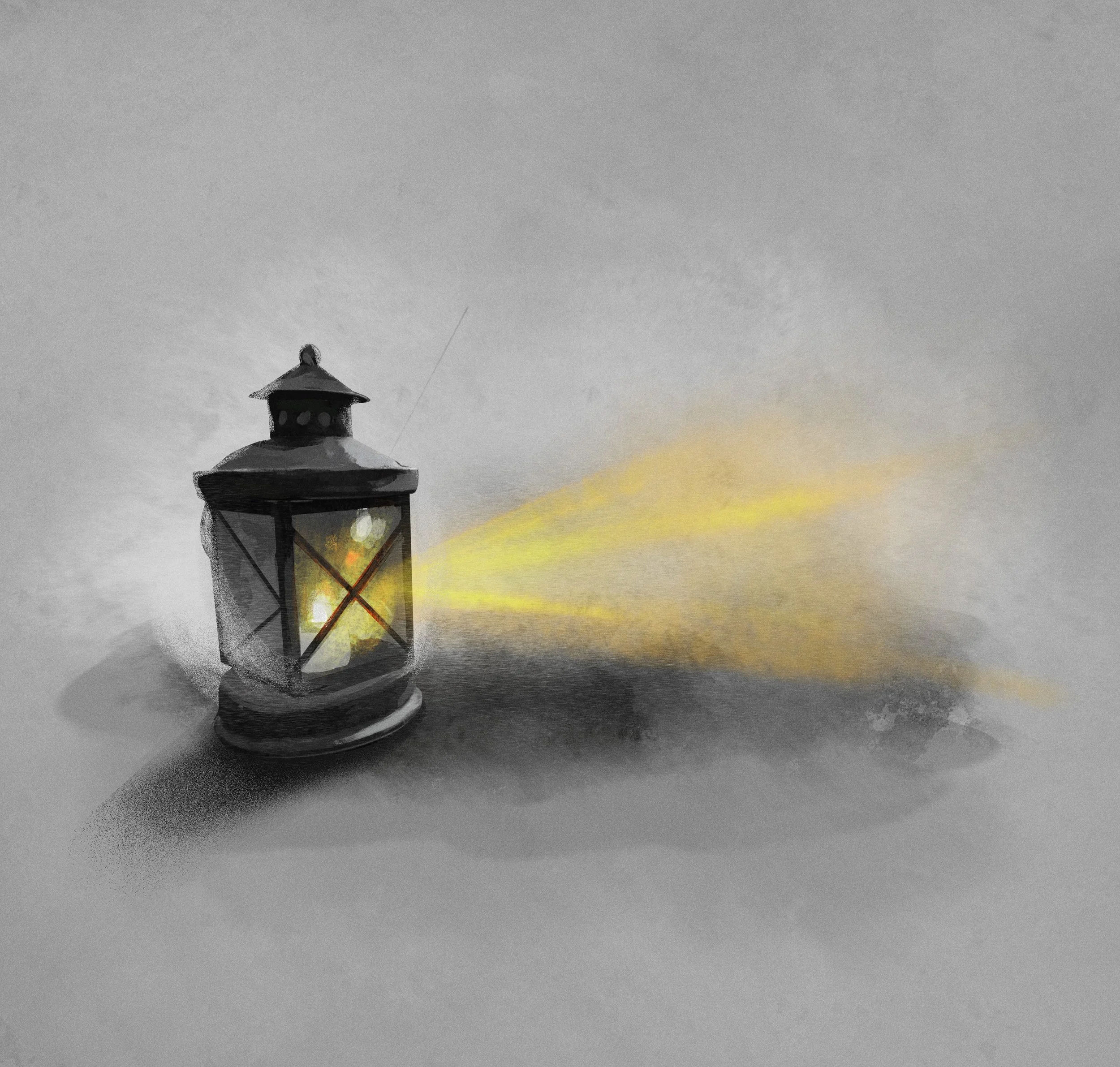
The Lantern
Why Leaders Miss the Signals That Matter
In a world of dashboards, insight is not the problem. Interpretation is.
Organizations have more data than ever before. Dashboards are full, metrics are tracked, and reports are shared in real time. Yet leaders still feel blind, not because information is missing, but because meaning is missing from the information.
The Lantern reveals signals before they become problems. It illuminates what is forming beneath the surface before breakdown is visible, before results decline, and before urgency forces action. Visibility, however, is different from understanding. And without understanding, nothing changes.
What the Lantern Actually Is
The Lantern is not a tool. It is a capability. A way of seeing. It represents AI, pattern recognition, and signal detection. It reveals:
Where friction is forming
Where alignment is beginning to fracture
Where decisions are slowing before they stop completely
The Lantern does not create new problems. It exposes the ones already taking shape.
The Problem with Modern Insight
Organizations say they are data-driven, but most are confirmation-driven. They rely on metrics that explain the past, ignore early signals that feel uncertain, and mistake reporting for understanding. So the system looks stable until it breaks.
“More data doesn’t create clarity. It amplifies whatever you already believe.”
The Role of AI
AI accelerates visibility. Patterns emerge faster, anomalies surface earlier, and connections become more visible. What AI does not do is replace leadership. AI requires leadership.
Signals without interpretation create noise. And noise, at scale, becomes a distraction. The real work is not seeing more. It is knowing what you are looking at and what to do next.
The Leadership Shift
To lead with the Lantern, something must change. Leaders must learn to read patterns, not just metrics. They must recognize early signals even when they are incomplete and act before issues become irrefutable. Most importantly, leaders must integrate signals across the system, not in isolated views.
This requires a different posture. Less reaction. More awareness. Greater discernment amid uncertainty. The earliest signals rarely arrive clearly. They arrive quietly.
The Lantern does not eliminate Fog; it makes it visible. And for the first time, leaders begin to see that it was never the absence of insight that slowed them. It was what they could see but had not yet chosen to understand.
Seeing is not the final step; it is the turning point. Once signals are visible, the question changes from:
“What is happening?”
to:
“What will we do about it and how will we sustain it?”
This is where most organizations hesitate. They see the patterns and recognize the friction, but still struggle to respond consistently under pressure. Action without rhythm does not hold.
What Comes Next
When the Lantern begins to reveal … signals surface, patterns emerge, and what was once hidden becomes visible, but new pressure follows. As visibility increases, so does complexity. More signals. More inputs. Less time to interpret what matters. The Lantern can show what is forming, but it cannot ensure a response. This is where strain returns, not because insight is missing, but because it is not consistently acted on.
The next challenge is not seeing more. It is responding in a way that holds. Because without a system to absorb and sustain what is seen, even the clearest signals fade back into noise.
Continue the Series
Next: Holding What the System Has Learned — The Rhythm
www.compassmapfog.com/blog/holding-what-the-system-has-learned-the-rhythm
Blog #3: Why Work Breaks Even When Direction Is Clear
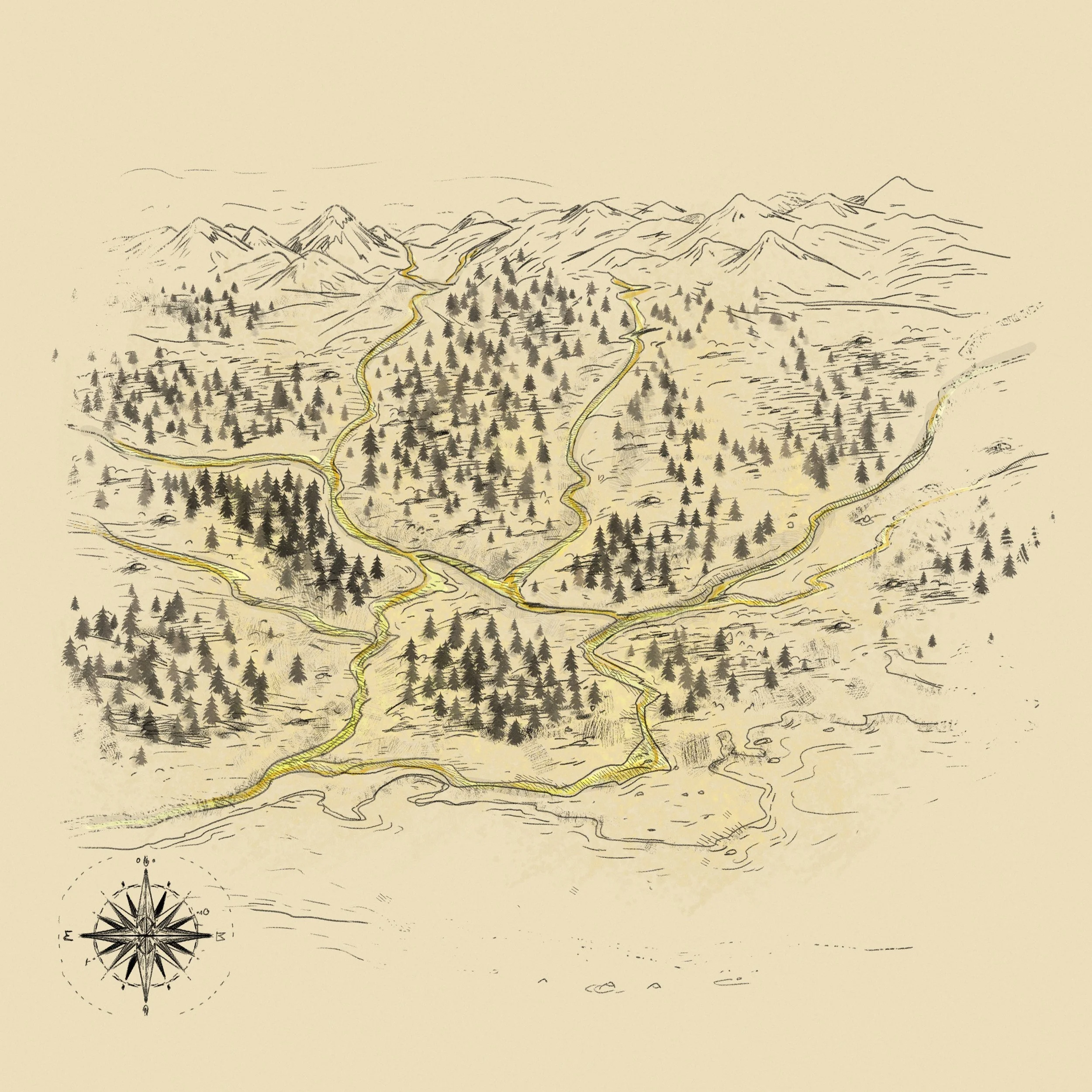
The Map
Structure, not strategy, is often where transformation fails.
With direction established, leaders expect progress. They have set clear priorities, made necessary decisions, and declared a path, at least in theory. But clarity without structure creates strain because knowing what to do is different from being able to do it.
The Map is the system that carries the work. It is what turns direction into movement and allows decisions to translate into outcomes. Without it, even the clearest direction collapses under the weight of execution. This is not because people are incapable; it is because the system cannot carry what has been asked of it.
What the Map Actually Is
The Map defines the architecture beneath the work. It defines how work flows from idea to execution. It defines how decisions move across levels and functions. Most importantly, it defines how teams connect, depend on, and respond to one another.
The Map is not a static design but a living system. One that either enables momentum or quietly resists it. When the Map is functioning, work moves with clarity and pace. When the Map is not functioning, even aligned teams will begin to stall.
Where the Map Breaks
The Map rarely fails in obvious ways. It breaks in patterns that feel manageable in isolation but compound across the system.
Misaligned roles where ownership is unclear, causing work to overlap or disappear between teams.
Fragmented workflows when work moves efficiently within teams but breaks at the handoffs.
Invisible dependencies where critical connections exist but are neither visible nor managed.
Bottlenecks at decision points with too many decisions relying on too few people, slowing everything behind them.
These are not isolated issues; they are signals of a system that cannot sustain its own commitments.
“A clear direction without a functioning Map creates friction, not progress.”
The Illusion of Productivity
At this stage, the organization often appears highly active. As we often experience, calendars are full, meetings are constant, updates are frequent, but output doesn’t compound. Work is started but not completed. It moves but doesn’t advance. Work is reported but not realized. Why, because flow is broken, and when flow is broken, effort increases while progress stalls.
The Leadership Shift
This is where leadership must change its lens. Leaders must stop asking:
“Are people working?”
And start asking:
“Is the system enabling the work to advance?”
Because when the Map is broken, no amount of effort will create sustained progress. The work will continue to circulate, stall, and strain the system. Once the Map is aligned, work begins to move with less force and more momentum.
What Comes Next
When the Map begins to hold, work moves, decisions flow, and teams reconnect, but new pressure follows. As flow improves, complexity increases with more signals, inputs, and less time. The Map can carry the work, but it cannot interpret change. This is where strain returns, not because the structure failed but because leaders cannot see what is shifting.
The next challenge is not building the system; it is sensing what the system cannot yet see.
Continue the Series
Next: Seeing What the System Cannot — The Lantern
www.compassmapfog.com/blog/seeing-what-the-system-cannot-the-lantern
Blog #2: From Fog to Compass - How Leaders Reestablish Direction
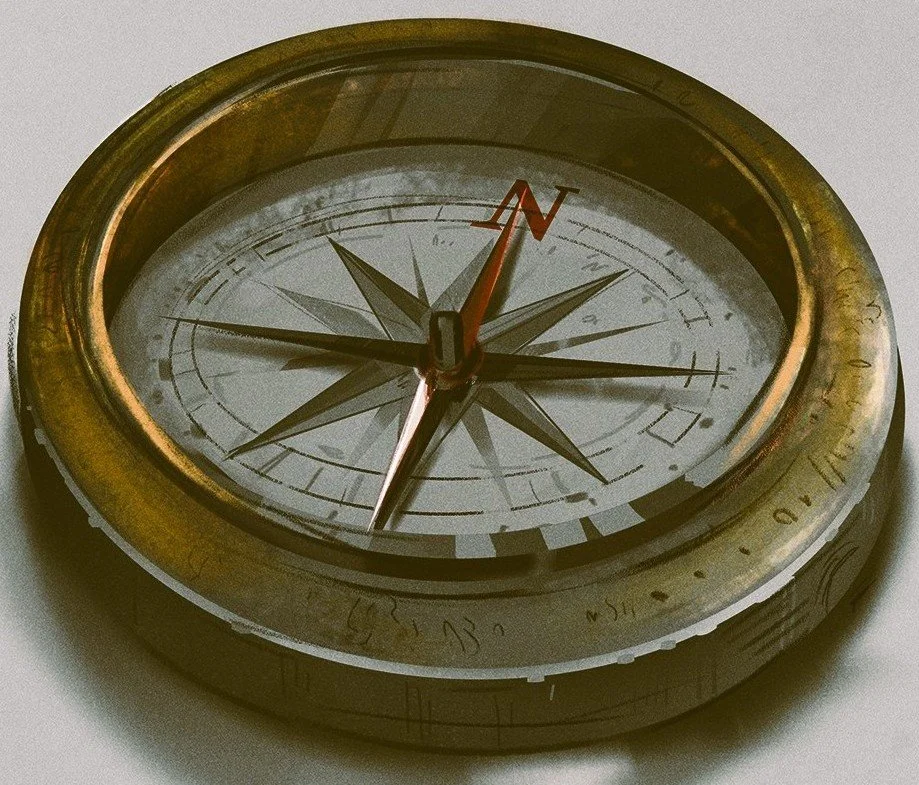
The Compass
Clarity is not declared it is chosen and held.
Once leaders recognize Fog, the instinct is to move faster, push decisions forward, and accelerate execution to regain momentum. But direction does not emerge from speed; it emerges from commitment.
““Clarity is not what is said once it is what is consistently chosen.””
The Moment After Fog
The most critical moment in transformation is not when misalignment appears; it is what leaders do next. Some leaders respond by refining the plan, others increase oversight, and many attempt to regain control through urgency. But none of these restores direction because direction was never lost on paper. Direction was lost in shared commitment.
The Myth of Alignment
Most organizations believe they are aligned because the strategy was communicated and the plan was agreed upon with the leadership team nodding together in the same room. But alignment is not a meeting outcome; it is a living condition that must be actively maintained.
“Agreement creates the illusion of alignment. Commitment is what makes it real.”
What the Compass Actually Is
The Compass is not a strategy document nor a vision statement, as so many of us believe. Compass is the answer to one question:
“What matters most right now, and what are we willing to hold?”
This question is deceptively simple, but it forces leaders to do what many avoid. It forces them to choose between competing priorities, make trade-offs visible, and stand behind decisions when pressure rises. The Compass is not about direction in theory but direction under pressure.
Why Leaders Struggle Here
Choosing creates tension. To choose one priority is to deprioritize another. To hold direction is to resist constant change. To create clarity is to expose where alignment does not exist. So instead, many organizations keep priorities broad, avoid hard trade-offs, and revisit decisions too quickly. This is when Fog quietly returns.
“If everything remains a priority, nothing becomes direction.”
The Practice of the Compass
Reestablishing direction requires more than simply deciding; it demands an ongoing and intentional practice. For organizations to maintain true alignment, leaders must consistently revisit and reinforce what matters most.
1. Anchor What Matters Most
Leaders must anchor what matters most by recognizing that not everything can move at once and that clarity requires intentional prioritization. This means making disciplined choices about what is essential to advance now, what can wait without consequence, and what will not be pursued at all. True clarity emerges when these distinctions are explicitly defined, enabling teams to focus their energy, reduce competing priorities, and move forward with shared direction.
2. Make Decisions Visible
Leaders must make decisions visible because alignment cannot form around what is unseen. Direction only becomes real when it is clearly stated, consistently communicated, and reinforced across teams over time. This visibility ensures that priorities are understood, decisions are not reinterpreted, and the organization moves forward with shared clarity rather than fragmented assumptions.
3. Hold the Line Under Pressure
Leaders must hold the line under pressure, as this is where alignment most often breaks down. When conditions shift, the tendency to reopen decisions, introduce new priorities, or dilute focus weakens direction and erodes the shared commitment needed to move forward. Sustained alignment depends on reinforcing decisions rather than constantly revisiting them, ensuring the Compass remains strong even as external pressures evolve.
What Strong Direction Feels Like
When the Compass is working, the system feels different. Decisions move faster, not slower. Teams act with confidence, and trade-offs are understood, not debated repeatedly. Energy begins to concentrate. Clarity is no longer a message; it becomes a shared experience.
“Direction is not proven by what is written it is proven by what is sustained.”
The Leadership Shift
The most effective leaders don’t just set direction they hold it. They understand that clarity is fragile and must be reinforced through repetition, consistency, and visible commitment. They don’t ask:
“Did we communicate the strategy?”
They ask:
“Are we still choosing the same direction together?”
What Comes Next
Once direction is clear, leaders expect execution to follow. Clarity alone does not create progress because even the strongest Compass cannot carry the work.
That requires something else.
Continue the Series
Next: Why Work Breaks Even When Direction Is Clear — The Map
www.compassmapfog.com/blog/why-work-breaks-even-when-direction-is-clear
Blog #1: Why Transformation Fails Even When Strategy Is Clear
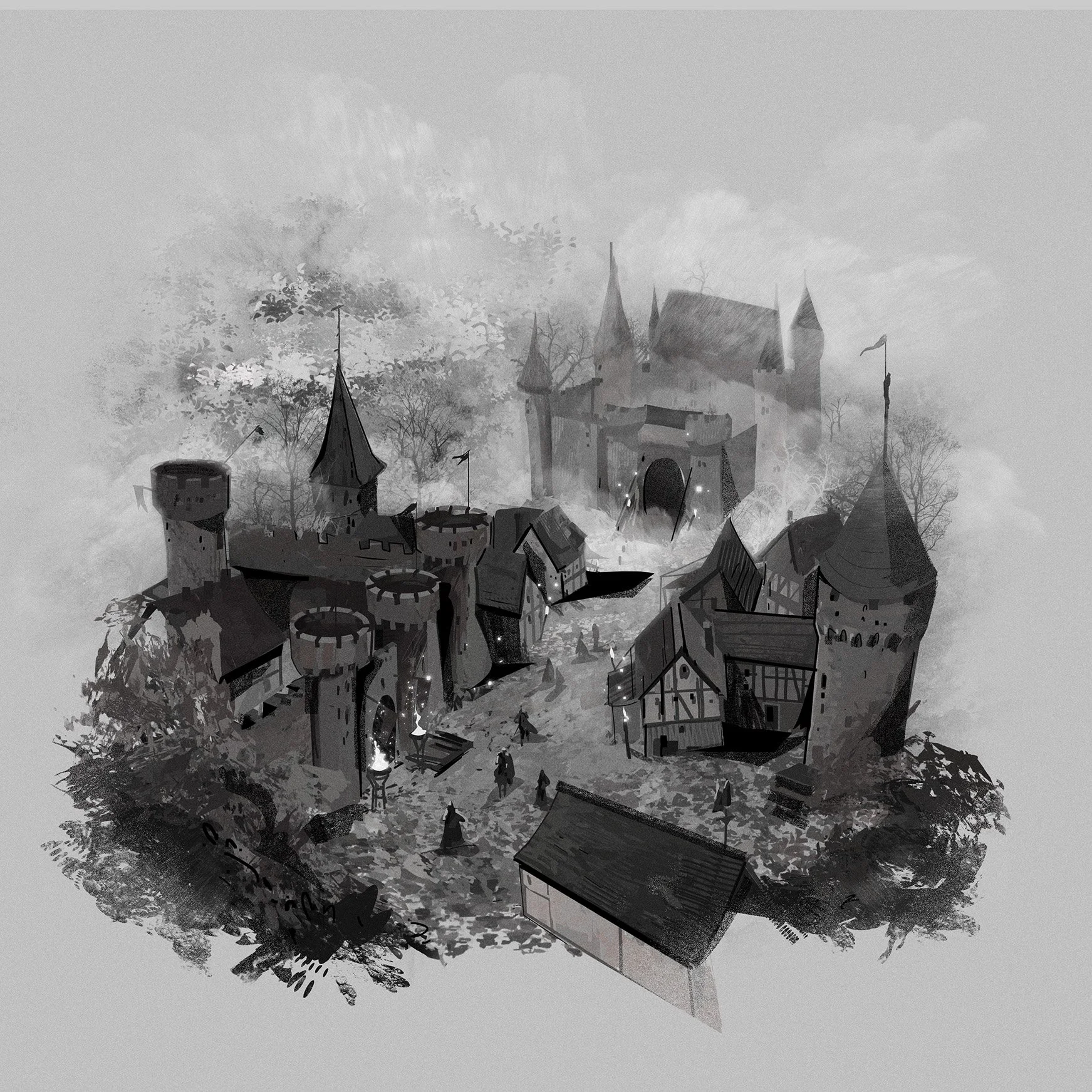
Fog is Misalignment
Even the most well-defined strategies can stall when alignment begins to fracture beneath the surface. This is the condition leaders don’t see until it is already shaping outcomes.
Introducing the Fog
There is a moment in nearly every transformation effort when something feels off, even though, on paper, everything should be working. The strategy is clear, the roadmap is defined, and the dashboards are green. Yet, progress stalls. What you are experiencing may not be a failure of strategy. It may be Fog.
“Transformation doesn’t fail from lack of strategy it fails from misalignment that hasn’t yet been seen.”
The Misdiagnosis of Failure
Most organizations are trained to look for problems like strategy clarity, execution discipline, talent gaps, and technology. So when progress slows, the instinct is to refine the plan, to add more detail, increase oversight, accelerate timelines, etc. But often, these actions do not solve the issue; they intensify it because the problem was never the Map.
What Fog Actually Is
Fog is not confusion but misalignment that hasn’t yet become visible enough to be named. It forms quietly when teams interpret strategy differently. Priorities compete, decisions lack shared context, and when signals are present but not connected. From the outside, everything looks aligned, but inside, coherence is already breaking down.
“Fog lives in the gap between what is said and what is actually shared.”
The Illusion of Clarity
One of the most dangerous conditions in transformation is assumed clarity. Leaders believe alignment exists because the strategy was communicated, the plan was agreed upon, and the organization “understands”. However, understanding does not equal shared meaning, nor does agreement equal commitment. This is the gap where Fog emerges.
Why More Structure Makes It Worse
When Fog appears, organizations often respond by tightening control. More meetings are scheduled, reporting increases, more approvals are necessary, and detailed plans multiply. More structure, cannot resolve misalignment that it cannot see. It does the opposite, creates friction by teams explaining more than executing, decisions start to slow down, and energy shifts from progress to protection. The system becomes heavier instead of clearer.
“You cannot solve unseen misalignment with more structure, you can only expose it.”
The Early Signals of Fog
Fog doesn’t announce itself; it shows up in patterns like conversations that do not lead to decisions, work that starts fast but loses momentum. It shows when teams feel busy but not effective, resulting in a sense of drift that leaders cannot fully explain. These are not execution problems; they are signal failures.
The Leadership Shift
The most effective leaders don’t push harder when this happens, they pause and ask a different question.
“Are we truly aligned, or are we assuming we are?”
Fog cannot be managed through acceleration; it must be revealed.
Naming the Condition
In The Compass, the Map, and the Fog, Fog is not just a metaphor; it is a condition of the system when direction exists, and effort is real, but coherence is missing. Until it is named, it cannot be addressed.
What Comes Next
Most transformation efforts don’t fail because leaders lack strategy. They fail because leaders lack a shared way to recognize when alignment has already begun to break. Fog is the first condition to learn to see. Once you can see it you can begin to move through it.
Continue the Series
Next: From Fog to Compass — How Leaders Reestablish Direction When Alignment Breaks Down
https://www.compassmapfog.com/blog/from-fog-to-compass-how-leaders-reestablish-direction